Episode Transcript
[00:00:00] Speaker A: I'm Cheryl Hofstadter Duffy, director of Writing across the Curriculum at Fort Hays State University.
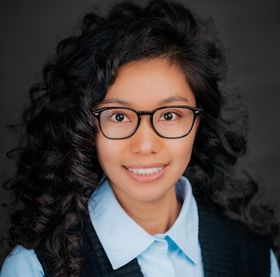
With me today is Michelle Iodice, who is emeritus professor from the University of Oklahoma. Now living in Lawrence, Kansas, Michelle has worked extensively with writing centers and is perhaps best known for her research on what makes writing meaningful for students.
She has co written the following books based on that research, the Meaningful Writing Project, Learning, Teaching and Writing in Higher Education, and more recently, just published in 2025, in fact, making writing A Guide for Higher Education.
So today I'll be asking Michelle about this research, what it is and why it's especially valuable for today's faculty members.
Anyone who has ever assigned a piece of writing knows that getting students engaged in that writing project can be challenging. We hope that today's podcast will help us all meet that challeng.
Welcome, Michelle.
[00:01:00] Speaker B: Thank you, Cheryl.
[00:01:03] Speaker A: So question number one, kind of to set the stage, can you tell us a bit about your research into meaningful writing? What prompted you to conduct this research in the first place?
What, in a nutshell, were your research methods and most importantly, what were your findings?
[00:01:20] Speaker B: Well, the start of this research goes back about 25 years where a few of us who were colleagues meeting at conferences, we just finally one day just threw up our hands and said, why do we ask students to write if all we're doing is complaining and all we're doing is focusing on the deficits of student writing?
And then it took us a couple years, but we finally got the right research question.
We also had a research grant that helped launch the project and paid for students to do the research with us, which was a really great facet of the research.
So our research question ends up being like asking students number one, which is not a very common research strategy, just to directly ask students their perspectives.
And our question was, can you tell us about a meaningful writing project as an undergraduate?
And they said, yes.
And then we said, tell us about it. Why was it meaningful for you?
Once we had that figured out, we did a survey at three different universities and had almost 1,000 responses.
And those students told us things like, we need to be engaged. We need you to show that you care about us.
We need to know really if we have any choices in here at all.
So all of those things that we learned ended up in the first book.
And then after the pandemic, we decided to do another round of survey and asked a couple of additional questions. And one of them was, what would you tell your teachers and mentors?
What do you need them to know about how to make more writing experiences meaningful.
[00:03:23] Speaker A: That's a great question.
[00:03:24] Speaker B: Yeah, yeah. And they gave us a lot of answers.
[00:03:28] Speaker A: And what did you find overall?
[00:03:30] Speaker B: Well, in the most recent survey, I. Not sure exactly. The number There is about 500 responses, and they're all qualitative answers. So we had to code all of those qualitative answers, but we were able to kind of sift it out to a few really key things.
What came back around very strongly was choice.
They told us they wanted their professors to be a little bit more hands on with writing.
Surprisingly, yes.
[00:04:03] Speaker A: That does surprise me a little bit.
[00:04:05] Speaker B: Meaning, you know, sit with us, talk to us about writing, give us feedback, put us in groups, and let us give feedback to each other.
So students are telling us that we could be more engaged.
[00:04:20] Speaker A: Very good.
It makes me wonder, though, in this day of AI, why should professors craft an assignment to be meaningful if students are just going to use ChatGPT?
[00:04:34] Speaker B: Well, I think that it's a test for faculty now.
[00:04:39] Speaker A: Absolutely.
[00:04:39] Speaker B: If you really want authentic writing, genuine writing, and not steer students towards AI, you have to design an experience that means a whole process.
You know, come up with your topic, talk with other people about it, get in a group, do some research, and then come back and talk about it again. We're not harnessing the power of student connection, collaboration, oral kinds of learning, just basically sitting around and talking about writing that I think has the power to kind of intercept that tendency to do a shortcut with AI.
[00:05:31] Speaker A: And sometimes I think students do that shortcut because they don't feel. They feel overwhelmed by the writing task. But if they're engaged more in the process and with one another and with the teacher and getting feedback, then they might be less likely to turn to AI.
[00:05:47] Speaker B: I agree.
[00:05:48] Speaker A: And we've been talking process for years. Sure.
And it just.
[00:05:53] Speaker B: We're still very focused on product.
[00:05:55] Speaker A: We are. Yeah, we are, sadly.
[00:05:57] Speaker B: And as long as that happens, they're gonna go to AI.
[00:06:00] Speaker A: They will. Because AI will give you a product.
[00:06:02] Speaker B: That's right.
[00:06:03] Speaker A: But it will not go through that thinking process for you or the feeling process.
[00:06:06] Speaker B: Right. You know, where you are really involved
[00:06:09] Speaker A: in and you care about what you're writing. Yes, exactly. Can you tell me, why should a professor craft an assignment to be meaningful when that professor already knows exactly what students need to write for their future work as psychologists or business managers or what have you?
[00:06:26] Speaker B: Yeah, that's a good question. Because we have a great deal of respect for disciplinary faculty who know the kinds of writing that happen in that field once students graduate in that Industry or that office, whatever, and they want students to be introduced to it.
But again, I think if they can add that engagement piece to make it more meaningful, it'll be more memorable for students. I think the transfer potential is greater.
And that's what we want. Right. We want students to transfer their new skills to another setting, to whatever kind
[00:07:04] Speaker A: of writing they're faced with.
[00:07:05] Speaker B: Exactly. So I think that, you know, if you're disciplinary faculty and you're always asking students to do the same office memo or some practice, something like that, why not try to find a dimension of it that they can add? A personal connection.
[00:07:22] Speaker A: Right. And choice.
[00:07:23] Speaker B: Exactly. Yeah.
[00:07:25] Speaker A: Because in your most recent book, you really drive home that three principles that the meaningful writing project means that there is connection. Students have a connection to the topic. They also have a connection to. To their professor and maybe to one another in the classroom.
The second one is that it's consequential, that it's writing that's not just busy work, that they really see the relevance of it.
Or maybe it actually has a consequence right now because it's some real world writing for a real audience.
And finally, just an expansive approach that means that there are options and it's not just the formal academic essay that we're asking students to write, that there are other kinds of writing, other ways to engage in the process.
[00:08:18] Speaker B: Yes, that is it.
[00:08:22] Speaker A: Many faculty members don't think of themselves as writing teachers, per se, so why should they try to help students have a meaningful writing experience?
Isn't that the job of the English department?
[00:08:38] Speaker B: Yes and no. Right.
I think in my travels, the campuses that have, you know, wack presence, not even, you know, like a really super duper program or anything, just faculty who get together and talk about student writing, those places are helping their colleagues. It's really much more of a community of practice. And so you're not banging people on the head, you're just saying, you know, here's the coalition of the willing, and they find there's a payoff. They have a richer experience with the students and maybe even find some of the writing to be amazing.
But if we just keep giving students the same old, same old, I don't think it's. I can't believe it could be that satisfying for faculty.
And you don't want them to just keep going through the motions.
[00:09:39] Speaker A: Absolutely. And really, I mean, I asked that question. But I'll tell you, here at Fort Hays, we did a faculty survey just a few years ago to see what was the culture of writing here. And one of the questions was, you know, helping students become proficient writers by the time they graduate is a job of the English department? Is a job of English department, or is a job within their major or is the job of the Gen Ed program or is the job of all of those entities? And I want to say 89%, but I know it was in the 80s, said, oh, it's the job of all of those entities working together. And I did a little cartwheel.
I really don't know how to turn one, but in my turned a mental cartwheel. Because that was good news for someone who directs Riding across the curriculum.
[00:10:34] Speaker B: Exactly. And it's a credit to your work and the way that you've brought people together. Because the places I've visited, where people are talking to each other, even a monthly lunch or something, it does make a difference.
[00:10:48] Speaker A: So finally, isn't it more work?
Sometimes it just boils down to that. We are all feeling stretched so thin.
Isn't it more work to develop and grade a meaningful writing project than it is to, as you said, you know, maybe just do the same old same old?
[00:11:09] Speaker B: I don't think it's more work in the labor sense.
I think it's more pre thought preparation and a little more intentionality has to go up front.
But.
And we did not study whether products were better or anything, you know, But I really do think that we ask the wrong things of students and we complain about how much that takes. Right.
So maybe if we just scaled down a little bit, we said, okay, I don't need them to do five assignments, I can have them do four and get deeper and spend more time and use some of that time to work together in the classroom.
So it doesn't have to necessarily be, you know, some huge project that is going to take me hours to grade.
[00:12:00] Speaker A: And even what you were talking about earlier, about students wanting faculty to be a little bit more hands on with their writing. The more hands on I found, you know, just in my own teaching, the more I have talked with students about their writing and had them do peer review. And I've maybe looked at initial drafts, maybe didn't respond to every one of them, but looked at a stack of drafts to get a sense of where they are in this assignment and gave them feedback. Then when it came time to do the actual grading of the final project, it went much more smoothly and more quickly because I was already a part of it.
[00:12:35] Speaker B: Right. You were familiar with it. You understood what the student was going through the process of development and growth.
[00:12:43] Speaker A: Yeah.
[00:12:43] Speaker B: And you weren't so focused on the final product.
[00:12:46] Speaker A: Right. Because I had been engaging with them during the process.
And I think what the Writing across the Curriculum Committee or the WAC committee can do is help folks see that it doesn't have to take a great deal of class time. A lot of that can be they can do online peer review with one another. I mean, there are ways around it and we're a resource for that. So thank you, Michelle, for sharing your research and your ideas with us to get us moving further along that path. For those of you listening, you can learn more, of course, by reading Michelle's books, especially on those three principles that I was talking about about regarding connection and being consequential and being expansive or open in your options. You can also just Google Meaningful Writing Project and you'll locate their website and find more information there. And of course, you can check out the FHSU Writing across the Curriculum website for resources.
And that website is FHSU EDU wac. That is wac.
Thank you.
[00:14:05] Speaker B: Thank you, Cheryl.